SUN
Star
around which the Earth and the other components of the solar system revolve. It
is the dominant body of the system, constituting more than 99 percent of its
entire mass.
It is made of gas, mainly hydrogen. The Sun is a source of an enormous
amount of energy, a portion of which provides the Earth with the light and heat
necessary to support life.
1.
our closest
star
2.
member of
the Milky Way galaxy
3.
yellow dwarf
star – which means it is a medium size star
4.
over 4
billion years old
5.
spins slowly
on its axis as it revolves around the galaxy
6.
Center, or
core very hot – temperature of 15,000,000 degrees C (27,000,000 degrees F)
7.
Streams of
gas particles known as the solar wind also flow out from it
8.
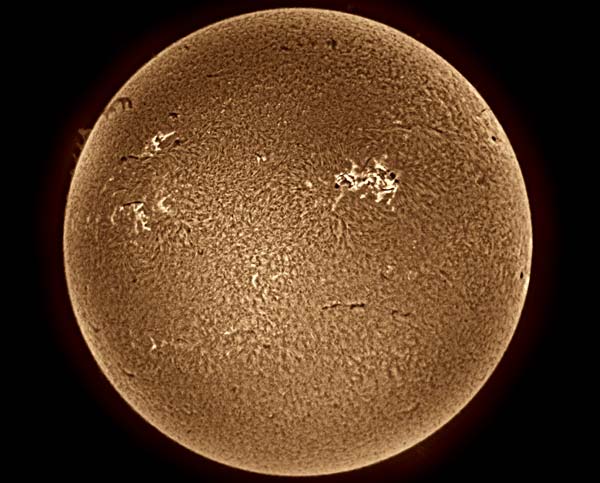
Storms on it
called “sunspots” – look like
dark spots on the Sun’s surface
9.
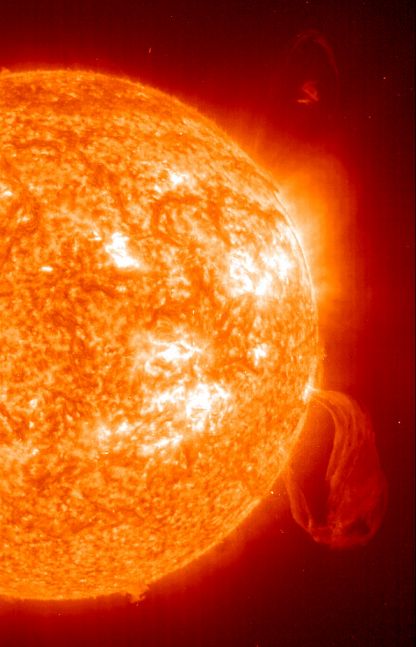
Produces big
explosions of energy called solar flares – flares shoot fast moving particles
off the Sun’s surface
10.
The Sun is, at present, about 75% hydrogen and 25% helium by mass. This
changes slowly over time as the Sun converts hydrogen to helium deep within its
core through nuclear fusion, providing source of energy