NEBULA
Gases and
dust that may form into stars or be the remains of a star that exploded
(supernova).
1.
A cloud of gas or dust between the stars
2.
Not uniformly distributed in space, but contain
denser knots – the seeds of future stars
3.
Such “dense” clouds still millions of times
less dense than air
4.
Emission nebulae – gas particles in cloud give
out light when excited by (absorb energy from) radiation from hot stars embedded
within them.
5.
Great Nebula in Orion – most famous emission
nebulae – visible in both northern and southern hemispheres
6.
Emission nebulae tinged red – the color of light
emitted by hydrogen atoms when they become excited.
7.
Hydrogen most plentiful element in nebulae; nebulae
mixture of 10:1 hydrogen and helium; stars get energy from nuclear reactions
that transform hydrogen into helium
8.
Reflection nebulae – stars within or near nebula
are cool; radiation not energetic enough to excite its atoms; nebulae merely
reflect the stars’ light – example, Merope
Nebula in constellation Taurus, among star cluster Pleiades (Seven Sisters)
9.
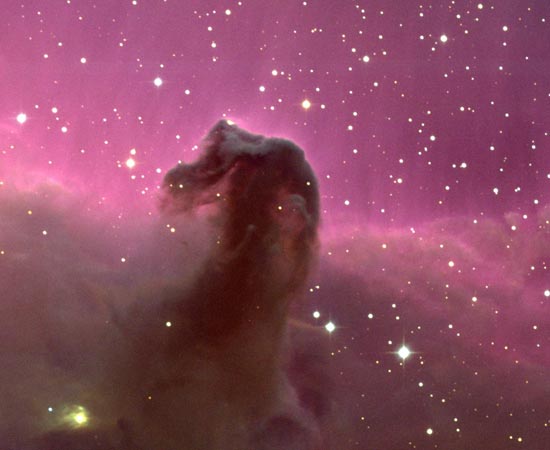
Dark nebulae –
seen as they blot out light from more distant stars ---example, Horsehead
Nebula in constellation Orion
10.
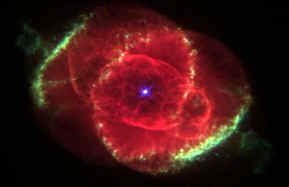
Planetary nebulae – as stars reach end of lives,
blow off gas that travels through space like expanding sphere, appearing like a
planet. Example – Cat’s Eye
Nebula in constellation Draco