METEOROID, METEORITE, METEOR
1.
Meteoroids burn up in atmosphere and fall to Earth
as dust.
2.
Every day, approximately 3000 metric tons
of dusty space material fall to Earth.
3.
travel around Sun in a variety of orbits and at
various speeds
4.
fastest meteoroids move at about 42 kilometers per
second
5.
meteoroids about the size of a pebble
6.
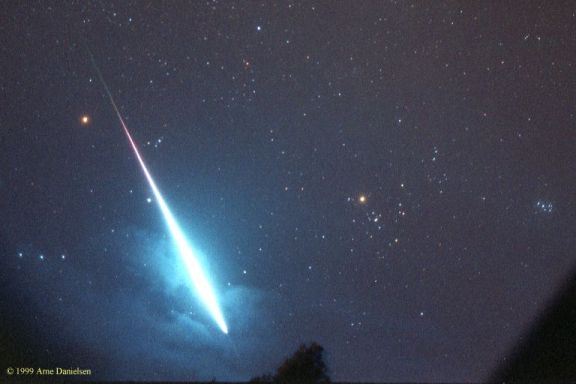
When one of these pieces of debris enters Earth's
atmosphere, friction between the debris and atmospheric gases heats it to the
point that it glows and becomes visible to our eyes. This streak of light in the
sky is known as a meteor
7.
On most dark nights, meteors can be seen. The
chance of seeing a meteor with the unaided eye increases after midnight
8.
Brightest of the meteors are called fireballs.
Sonic booms often follow the appearance of a fireball just as thunder often
follows lightning
9.
If meteor does not burn up completely, remaining
portion hits Earth and is then called a meteorite - over 100 hit
Earth each year
10.
Larger meteorites believed to have originated in
the asteroid belt. Some smaller meteorites identified as moon rock, while still
others identified as pieces of Mars.